




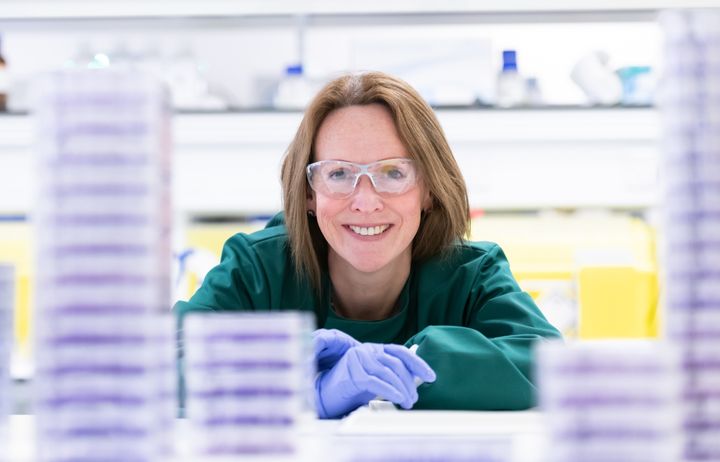
Dr Glenda E Gillies

Contact details

Professor Glenda E Gillies

Professor of Neuroendocrine Pharmacology
Department of Medicine

Tel: +44 (0)20 7594 7050
Email: Email address for Professor Glenda E Gillies

Dr Glenda E Gillies

Reader in Neuroendocrine Pharmacology

With the support of a Wellcome Trust University Award, Dr Gillies joined Charing Cross and Westminster Medical School as Senior Lecturer. She later became Reader in Imperial College Faculty of Medicine, incorporating a period as Wellcome Trust Research Leave Fellow. Her research interests relate to sex differences in structure and function in the brain, how these depend on the actions of sex and stress hormones during development and in adulthood, and how such differences contribute to sex differences in susceptibility to CNS disorders.

Initial work on the classical hypothalamic neuroendocrine system led to new discoveries on central factors controlling the stress response (two Nature papers), and sex-specific patterns of growth hormone release and growth rates. Associated work provided the first demonstration that very low levels of endocrine disrupting chemicals alter the developmental trajectory of hypothalamic dopaminergic neurones, highlighting the potential for environmental chemical pollutants to alter normal patterns of neuronal development.

Current work focuses on midbrain dopaminergic systems, disruptions to which are implicated in the commonest brain disorders, such as attention-deficit/hyperactivity-disorder, schizophrenia, drug abuse and Parkinson’s disease. These conditions affect men more than women, have putative developmental components, and are likely to benefit from sex-specific therapies, which currently are lacking. Recent findings include new insights into sex differences and steroid hormone influences within the nigrostriatal dopaminergic pathway (NSDA), highlighting sex dimorphisms under normal conditions and in experimental Parkinson’s disease. Collaborative work with Dr David Dexter and Professor Julia Buckingham has also demonstrated sex-specific effects of stress and glucocorticoid stress hormones in experimental PD, providing the first direct evidence for mechanisms by which stress may contribute to sex differences in neurodegenerative disease.

Recent scientific contributions include characterisation of sex differences in the 3D cytoarchitecture in adult midbrain dopaminergic neuronal populations of the ventral tegmental area, as well as the substantia nigra pars compacta, and discovered that this is disrupted by brief perinatal treatment with glucocorticoid stress hormones. This suggests novel mechanisms by which early environmental stressful challenges could impact on normal physiology, potentially leading to pathological change in later life in key brain pathways regulating adaptive behaviours. On-going work is investigating the functional consequences of this neurobiological programming at molecular, cellular and whole animal behavioural levels.

In a new collaboration with Dr Egle Solito, we are characterising brain patterns of expression of the glucocorticid-inducible protein, Annexin-1, in the normal and injured (parkinsonian) rodent brain. This work suggests a role for Annexin-1 in regulating microglial effecrocytosis of degenerating dopamine-producing cells, and provides important evidence that annexin-1 is a key player in the resolution of inflammation in the brain, just as it is in the periphery.

Collaborators

  • Professor ICAF Robinson, NIMR, Mill Hill
  • Dr J. Dalley, Cambridge,
  • Professor T. Robbins, Cambridge
  • Dr M. Ungless, ICL
  • Dr. Kevin O’Byrne, KCL
  • Dr. E Solito, ICL

Teaching

I contribute to the undergraduate medicine MBBS courses and BMedSci/Graduate entry courses with lectures and tutorials in Pharmacology, Endocrinology and Neuroscience. As Course Director I take the academic lead for the Endocrinology BSc, and am also organiser of the module on ‘Neuroendocrinology, Health and Disease’ for this course

Recent key publications

  • View all of my current publications
  • McArthur, S., Robinson, I.C.A.F. and Gillies, G. E., “Novel Ontogenetic Patterns of Sexual Differentiation in Arcuate Nucleus GHRH Neurons revealed in GHRH-Enhanced Green Fluorescent Protein Transgenic Mice” Endocrinology 2010 in press
  •  McArthur, S., Cristante, E., Paterno, M., Christian, H., Roncaroli, F., Gillies, G.E., Solito, E., “Annexin A1: a central player in the anti-inflammatory and neuro-protective roles of microglia” J. Immunology. 2010;. in press 
  • Gillies, G. E., McArthur S “Estrogen actions in the brain and the bases for differential actions in men and women: a case for sex-specific medicines”. Pharmacological Reviews  (2010), 62 (2): 155-198

  • Gillies, G. E. McArthur, S. “Independent influences of sex steroids of systemic and central origin in a rat model of Parkinson’s disease: a contribution to sex-specific neuroprotection by estrogens. Hormones and Behaviour (2010), 57(1): 23-34.
  • Solito E.S., McArthur S., Christian H., Gavins, F., Buckingham, J.C., Gillies, G.E. “Annexin A1 in the brain – undiscovered roles?. Trends Pharmacol Sci (2008), 29(3): 135-142.
  • McArthur, S., McHale E., Gillies G.E. “The size and distribution of midbraindopaminergic populations are permanently altered by perinatal glucocorticoid exposure in a sex- regionand time-specific manner”. Neuropsychopharmacology (2007), 32: 1462-1476.
  • McArthur S, Murray, H.E. Dexter D. & Gillies G. “Striatal susceptibility to dopaminergic neurotoxins is independent of sex hormone effects on cell survival and DAT expression but exacerbated by central aromatase inhibition”. J.Neurochem. (2007), 100: 678-692.
  • Warne, J.P., John, C. D., Christian H., C., Morris, J.F., Flower, R.J., Sugden D., Solito E., Gillies, G.E. & Buckingham, J.C. (2006). Gene deletion reveals roles for annexin 1 in the regulation of lipolysis and interleukin 6 release in visceral adipose tissue. Am J. Physiol. Endocrinol Metab. (2006) 291: E1264-1273.
  • McArthur, S., Siddique, Z-L., Capone, G., Christian H.C., Theogaraj, C.D., John, C.D., Smith S.F., Morris, J.F., Buckingham, J.C., Gillies G.E. “Perinatal glucocorticoid treatment disrupts the hypothalamo-lactotroph axis in adult female but not male rats”. Endocrinology (2006), 147: 1904-15
  • McArthur, S.R., McHale E., Dalley J., Buckingham, J.C. & Gillies, G.E. "Altered mesencephalic dopaminergic populations in adulthood as a consequence of brief perinatal glucocorticoid exposure". J. Neuroendocrinology (2005), 17 (8): 475-82.
  • Gillies GE, Murray HE, Dexter D, McArthur S. Sex dimorphisms in the neuroprotective effects of estrogen in an animal model of Parkinson’s disease”. Pharmacol Biochem Behav. (2004), 78: 513-22.
  • Datla KP, Murray H.E., Pillai AV, Gillies GE and Dexter DT. “Differences in the susceptibilty of the nigrostriatal dopaminergic pathway to the neurotoxin 6-OHDA during the estrous cycle.” Neuroreport (2003), 14: 47-50.
  • Murray, H.E., Pillai, A.V., McArthur, S.R., Razvi, N.,Datla,., K.P., Dexter, D.T. and Gillies, G.E. “Dose- and sex-dependent effects of the neurotoxin 6-OHDA on the nigrostriatal dopaminergic pathway of adult rats: differential actions of estrogen in males and females”. Neuroscience (2003), 116: 213-222.
  • Pannell, C., Simonian, S. X., Gillies, G. E., Luscher, B., Herbison A. E. “ Hypothalamic somatostatin and growth hormone releasing hormone mRNA expression depend upon GABAA receptor expresion in the developing mouse. Neuroendocrinology (2002), 76: 93-98.
  • Murray, H.E., Rantle, C.M., Simonian, S.X., Herbison, A.E. and Gillies, G.E. "Sexually dimorphic ontogeny of GABAergic influences on periventricular somatostatin neurons" Neuroendocrinology (1999), 70: 384-391.
  • Christian, M. and Gillies, G. "Developing hypothalamic neurones as potential targets for environmental estrogens" J.Endocrinology 160, (1999), R1 – R6.
  • Murray, H.E., Simonian, S.X., Herbison, A.E. and Gillies, G.E. "Ontogeny and sexual differentiation of somatostatin biosynthesis and secretion in the hypothalamic periventricular-median eminence pathway" J. Neuroendocrinology 11, (1999), 35-42
  • Murray, H.E., Simonian, S.X., Herbison, A.E. and Gillies, G.E. "Correlation of hypothalamic somatostatin mRNA and peptide content with secretion: sexual dimorphism and differential regulation by gonadal factors" J. Neuroendocrinology 11, (1999), 27-33.
 

Selected Publications


Journals

  • McArthur S; Robinson IC; Gillies GE. (2010). Novel Ontogenetic Patterns of Sexual Differentiation in Arcuate Nucleus GHRH Neurons revealed in GHRH-Enhanced Green Fluorescent Protein Transgenic Mice. Endocrinology.
  • Gillies GE; McArthur S. (2010). Estrogen actions in the brain and the bases for differential actions in men and women: a case for sex-specific medicines. Pharmacological Reviews. 62:155-198.
  • McArthur S; Cristante E; Paterno M; Christian H; Roncaroli F; Gillies GE; Solito E. (15 Nov 2010). Annexin A1: a central player in the anti-inflammatory and neuroprotective role of microglia. J Immunol. 185:6317-6328. DOI.
  • Gillies GE; McArthur S. (Jan 2010). Independent influences of sex steroids of systemic and central origin in a rat model of Parkinson's disease: A contribution to sex-specific neuroprotection by estrogens. Horm Behav. 57:23-34. DOI.
  • Solito E; McArthur S; Christian H; Gavins F; Buckingham JC; Gillies GE. (Mar 2008). Annexin A1 in the brain--undiscovered roles?. Trends Pharmacol Sci. 29:135-142. DOI.
  • McArthur S; McHale E; Gillies GE. (Jul 2007). The size and distribution of midbrain dopaminergic populations are permanently altered by perinatal glucocorticoid exposure in a sex- region- and time-specific manner. NEUROPSYCHOPHARMACOL. 32:1462-1476. DOI.
  • Warne JP; John CD; Christian HC; Morris JF; Flower RJ; Sugden D; Solito E; Gillies GE; et alBuckingham JC. (Dec 2006). Gene deletion reveals roles for annexin A1 in the regulation of lipolysis and IL-6 release in epididymal adipose tissue. Am J Physiol Endocrinol Metab. 291:E1264-E1273. DOI.
  • McArthur S; Siddique ZL; Christian HC; Capone G; Theogaraj E; John CD; Smith SF; Morris JF; et alBuckingham JC; Gillies GE. (Apr 2006). Perinatal glucocorticoid treatment disrupts the hypothalamo-lactotroph axis in adult female, but not male, rats. Endocrinology. 147:1904-1915. DOI.
  • McArthur S; McHale E; Dalley JW; Buckingham JC; Gillies GE. (Aug 2005). Altered mesencephalic dopaminergic populations in adulthood as a consequence of brief perinatal glucocorticoid exposure. J Neuroendocrinol. 17:475-482. DOI.
  • Gillies GE; Murray HE; Dexter D; McArthur S. (Jul 2004). Sex dimorphisms in the neuroprotective effects of estrogen in an animal model of Parkinson's disease. Pharmacol Biochem Behav. 78:513-522. DOI.
  • Datla KP; Murray HE; Pillai AV; Gillies GE; Dexter DT. (20 Jan 2003). Differences in dopaminergic neuroprotective effects of estrogen during estrous cycle. Neuroreport. 14:47-50. DOI.
  • Murray HE; Pillai AV; McArthur SR; Razvi N; Datla KP; Dexter DT; Gillies GE. (2003). Dose- and sex-dependent effects of the neurotoxin 6-hydroxydopamine on the nigrostriatal dopaminergic pathway of adult rats: differential actions of estrogen in males and females. Neuroscience. 116:213-222.
  • Pannell C; Simonian SX; Gillies GE; Luscher B; Herbison AE. (Aug 2002). Hypothalamic somatostatin and growth hormone-releasing hormone mRNA expression depend upon GABA(A) receptor expression in the developing mouse. Neuroendocrinology. 76:93-98.
  • Murray HE; Rantle CM; Simonian SX; DonCarlos LL; Herbison AE; Gillies GE. (Dec 1999). Sexually dimorphic ontogeny of GABAergic influences on periventricular somatostatin neurons. Neuroendocrinology. 70:384-391.
  • Murray HE; Simonian SX; Herbison AE; Gillies GE. (Jan 1999). Ontogeny and sexual differentiation of somatostatin biosynthesis and secretion in the hypothalamic periventricular-median eminence pathway. J Neuroendocrinol. 11:35-42.
Share this on DeliciousTweet thisDigg thisStumble thisShare this on Facebook
 

Working in Research Themes