Department of Medicine

Human Disease Immunogenetics Group

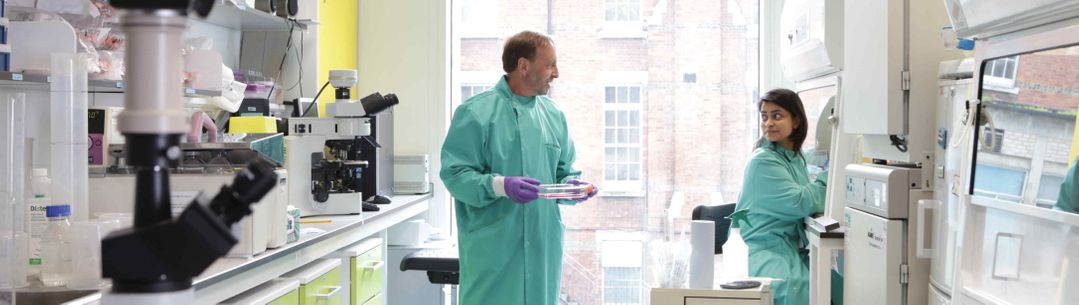
Welcome to the Human Disease Immunogenetics group in the Section of Infectious Diseases and Immunity,  Hammersmith campus, Department of Medicine, Imperial College.

About the Human Disease Immunogenetics Group

The research group is largely based in the Commonwealth Building at the Hammersmith Hospital, London. Headed by Professor Danny Altmann and Dr Rosemary Boyton, the work of the team has centred on the use of molecular and cellular immunology approaches to investigate interactions between HLA class II molecules, antigenic peptides, CD4 T cells and natural killer cells in disease. The group collaborate with clinical and experimental immunology groups across Imperial College and internationally.  The lab aims to deliver training in immunology at all levels including undergraduate, Masters and PhD students and Clinical Training Fellows from different specialties. The lab currently includes scientists from 6 different countries. Danny Altmann is Editor in Chief of Immunology. Rosemary Boyton is on the Editorial Board of Clinical and Experimental Immunology.

pascal images

Areas of Research Focus

Multiple sclerosis and other autoimmune diseases

This has been a particular focus of interest. Our work benefits from access to very well characterised patients, from our work with the UK MS Tissue Bank and from the way our human studies inform our transgenic disease models. We wish to gain a better understanding of patient T cell responses to myelin epitopes, HLA-C/KIR genotypes and the relationship of these to disease. Work looking at immune responses in patient T lymphocytes has investigated the evidence for determinant spread of the response to myelin with time. With respect to clinical samples, the work involves collaboration with Drs Omar Malik and Richard Nicholas at Imperial College Academic Health Science Centre. We have also been particularly interested in generating 'humanised,' spontaneous models of MS, which may serve better to bridge the translational gap between findings in the EAE model and the clinical disease setting. These models require expression of the relevant human HLA class II molecule along with a patient-derived T cell receptor specific for the myelin peptide presented by that HLA molecule. Some of this work has been a collaboration with Professors David Hafler and Vijay Kuchroo (Harvard). These models are being utilised for analysis of novel therapeutics in collaboration with Professor Jack Strominger at Harvard. An important component of these studies has been the development of technologies for MRI imaging. A recent focus of interest has been the role of natural killer (NK) cells in MS. Our work on MS has recently benefited from support by the Wellcome Trust, BBSRC, MS Society and the Hadwen Trust.

Prion Proteins in the Immune System

Another area of interest within our neuroimmunology research programme has been the relationship between T cell immunology and prion protein expression. On the one hand, we wish to gain insights into the reasons for and consequences of the very high levels of PrP expression expressed in a regulated fashion during T cell activation. On the other hand, it is important with respect to understanding the immune response during prion disease and the potential for its manipulation that we have some understanding of the immune response to PrP epitopes. In a collaborative research project with John Collinge's MRC Prion Unit we have been investigating the role of endogenous prion protein expression in T lymphocytes. This work encompasses also the analysis of T cell epitopes and cytokine profiles in the human T cell immune recognition of endogenous PrP. 

T cells, bacterial immunity and sepsis

Mapping CD4 T cell responses in bacterial infection

A number of projects address issues of T cell immune responses to bacterial infection. Serious bacterial infections pose significant challenges to immunologists aiming to understand how the host-pathogen interaction might lead to diverse outcomes from asymptomatic carriage to sepsis or death. The group has been a recipient of an NIH-NIAID multi-million dollar research contract to define and characterise immune epitopes from anthrax (Bacillus anthracis) and plague (Yersinia pestis).  The project is part of an international endeavour to define microbial epitopes for the Immune Epitope Database (www.IEDB.org). Our work looks at CD4  cell epitopes, the influence of infection on epitope recognition, and the protective potential of various vaccine strategies. The live, bacterial challenge components of this work are not done at the Hammersmith campus; they are being undertaken in collaboration with Dr Di Williamson at Dstl, Porton Down.  Other collaborators on this programme are Prof John Robinson (Newcastle), Dr Les Baillie (UMBI, Maryland) and Dr Bernard Maillere (Saclay).

Bacterial Sepsis

We have a long-standing collaboration with the laboratory of Professor Shiranee Sriskandan (Imperial College, Hammersmith) on immune mechanisms underpinning bacterial sepsis and, in particular, the effects of steptococcal superantigens. In the past, we have reported highly superantigen-sensitive, HLA transgenic sepsis models.  This led to the description of cytokine pathways associated with toxic shock. Current research funded by the Medical Research Council (MRC) focuses on molecular analysis of shock and on regulatory T cell control of acute infection.

CD4 and CD8 T cell epitopes of Burkholderia pseudomallei 

Through a new multimillion dollar NIH-NIAID-funded research programme, we are mapping the CD4 and CD8 T cell epitopes of Burkholderia pseudomallei as part of the international consortium, the Immune Epitope Database (www.IEDB.org).  It is a large scale, high-throughput, patient and HLA transgenic model based analysis of T cell epitopes in the immune response to Burkholderia pseudomallei, the causative agent in melioidosis. The candidate panel of epitopes are being analysed in the context of protection and pathogenicity. Burkholderia pseudomallei (previously called Pseudomonas pseudomallei ) is the causative agent of melioidosis, a serious disease that occurs primarily in S.E. Asia, N. Australia and other tropical areas. B. pseudomallei is an environmental Gram-negative saprophyte present in wet soil and rice paddies in endemic areas. The highest documented infection rate is in northeastern Thailand, where melioidosis accounts for 20% of all community-acquired septicaemia. The aim of this large scale programme is to define the relationship between patterns of T cell immunity to bacterial proteins and disease outcome. Our patient based studies are done with Dr Lertmemongkolcha and her patient cohort in N.E. Thailand.

International research team mapping the CD4 and CD8 T cell epitopes of Burkholderia pseudomallei

International research team mapping the CD4 and CD8 T cell epitopes of Burkholderia pseudomallei

Dr Rosemary Boyton & Professor Daniel Altmann (Project Leads), Dr Louise Kim (project manager), Dr Karen Chu (post-doctoral scientist), & Dr Bernadette Byrne (Protein Facility), Khon Kaen (Unviersity Faculty of Associated Medical Sciences, Thailand) Dr Ganjana Lertmemongkolchai & Dr Patcharaporn Tippayawat (post-doctoral scientist). University of Newcastle Professor John H. Robinson & Dr Julie Musson (post-doctoral scientist). London School of Hygiene and Tropical Medicine London Dr Greg J Bancroft & Dr Natasha Patel (post-doctoral scientist). Department of Molecular Engineering of Proteins, CEA-Saclay, Gif sur Yvette, France Dr Bernard Maillere and Dr Mounia Sid Ahmed (post-doctoral scientist).

Biomedical Research Centre Imaging and FACS facility

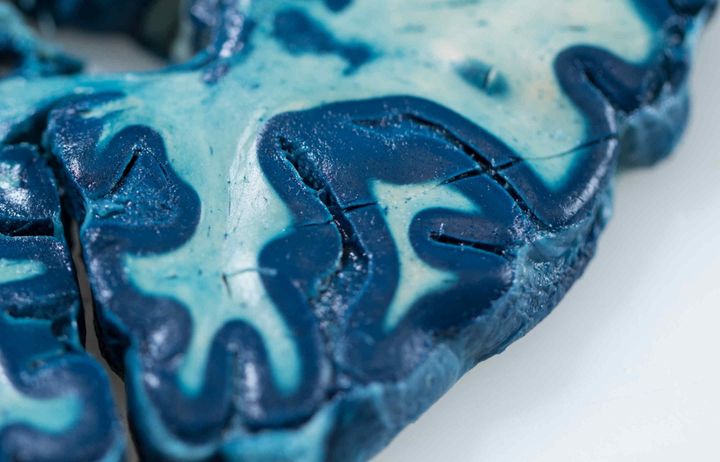
The human brain in MS, by Pascal Durrenberger

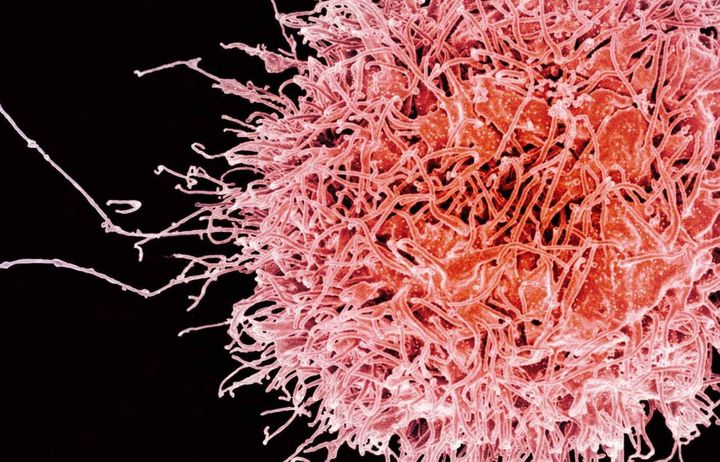
Astrocyte staining in human MS brain, by Pascal Durrenberger

The research group is home to the Imperial College Healthcare NHS Trust, National Institute for Health Research biomedical research centre Hammersmith Campus imaging facility. The BRC Imaging and FACS facility is a state of the art resource for multi-parameter flow cytometry and confocal microscopy. We are fortunate in having a very experienced research fellow to oversee experimental work, Dr Anna Ettorre. The Facility is currently equipped with a customized BD FACS Aria II multi-parameter cell sorter and a Leica TCS-SP5 Supercontinuum Confocal Microscope.

Fellowships, Studentships, post-doctoral positions and the immunological teaching environment.

HDIG has over several years trained a large number of clinical training fellows, scientific PhD students and post-doctoral scientists in T cell molecular immunology. Clinical training fellows have come from a wide range of clinical specialties including infectious diseases, respiratory medicine, rheumatology, renal medicine and neurology. The campus offers a stimulating, immunological teaching environment including daily external seminars and various journal clubs.

Meet the Human Disease Immunogenetics Group

Danny Altmann 

Danny

Danny

I am the Head of the Human Disease Immunogenetics Group, Professor of Immunology/Deputy Head of Department in the Section of Infectious Diseases and Immunity and Director of Research Strategy, Department of Medicine.

Mini bio

I have worked for a number of years in the area of CD4 T cells and HLA class II in disease models. I moved to Imperial College in 2001 following several years as a tenured scientist with the Medical Research Council Clinical Research Centre. Prior to that I worked at Imperial Cancer Research Fund, the Weizmann Institute of Science and University of Bristol.

Role model

Alastair Cook (for his ability to tell a good story) and Saul Bellow (for knowing how to tell a story without extraneous words).

Hobbies

I used to have many hobbies including sculpting and literature, now too busy looking after many children.

Favourite holiday spot

At a Tuscan villa in the vineyard by a pool, with a large glass of wine, reading Iris Murdoch and watching the children play. 

Stephanie Ascough (Steff)

Steph

Steph

I am a Research Assistant and part-time PhD student working with HLA class II transgenic models on the T cell response to Bacillus anthracis.

Mini bio

BSc in Parasitology at Aberdeen University.

Role model

Rosalind Franklin (except without the dying young bit).

Hobbies

Exploring London by going to gigs, theatre, opera. Scuba-diving (when I get the time) and hiking (when I get out of London).

Favourite holiday spot

I love travelling, so for me anywhere new is exciting. Especially loved Laos and Vietnam.

Deborah Chong (Debs)

Debs

Debs

I am a post-doc in Rosemary Boyton's lab working on bioluminescent and fluorescent reporter models

Mini bio

Graduated from Oriel College, Oxford with a Masters in Molecular and Cellular Biochemistry (MBiochem). I did my PhD with Danny Altmann at Imperial College characterising regulatory T cells during acute Group A Streptococcal infection.

Role model

Watson and Crick (for discovering the structure of DNA without doing any experimental work). If only all science was like that!

Hobbies

Generally socialising, going to the cinema, running and being dragged up and down the Thames in a rowing boat (aka coxing) when the weather is nice.

Favourite holiday spot

Definitely Hong Kong - great food, climate and shopping! Anywhere that is warm with great food and drink. A bit of culture wouldn't go amiss as well!

Karen Chu

Karen

Karen

I am continuing the work begun by Dr. Ingram on CD4 T cell responses to Bacillus anthracis and  Yersinia pestis antigens.  This work involves screening peptide epitopes across a panel of HLA types using the super elegant and reductionist HLA transgenic mice.

Mini bio

I did my doctorate in Pathology and Laboratory Medicine in my hometown of Vancouver, British Columbia, Canada.  I then decided to run away to London to do a three year postdoctoral research post in Dr. Greg Bancroft's lab at the London School of Hygiene and Tropical Medicine, looking at vaccine candidates for the opportunistic tropical pathogen, Burkholderia pseudomallei.

Role model

Too many!  Alison Goodwin, Lucy Brooks, Marjorie Robbins, Cristina Tognon, Chandrabala Shah, Margaret Atwood, Tina Fey, my sisters...

Hobbies

Running, cooking, yoga. Travelling when I have the chance.

Favourite holiday spot

I will never tire of going to Whistler, B.C., summer, winter, spring, fall...  

Pascal Durrenberger

Pascal

Pascal

My work is focused on neuroinflammation with an interest in the discovery of novel inflammatory pathways and therepeutic approaches. I currently do this in the context of Multiple Sclerosis.

Mini bio

Graduated at Birkbeck College with a BSc in psychology, then with a Masters in clinical neuroscience and immunology at the University of Surrey and finished with a PhD in clinical medical research at Imperial College London. I have been working at Imperial College on several projects.

Role model

Albert Schweitzer, Isaac Azimov, Audrey Hepburn, H.G. Wells, Jule Vernes, Louis Pasteur, Captain Future, Steve McQueen, Steven Spielberg, Richard Dawkins, Sir David Attenborough and Alan Shearer.

Hobbies

Hiking, rafting, climbing, skiing, bodysurfing, horse riding, cycling, reading, board games.

Favourite holiday spot

Long walks in the Alps in the summer time.

Anna Ettorre

Anna

Anna

I am a BRC Research Fellow working in the Human Disease Immunogenetic group headed by Prof. Danny Altmann. My research is mainly focused on the role played by NK cells and KIR receptors in Multiple Sclerosis. I am also in charge of the new BRC FACS and microscopy core facility in the Department of Infectious Diseases and Immunity and developing new FACS based assays to study T and NK cell subsets in human and mouse models.

Mini bio

I was trained as Medicinal Chemist and I got my PhD in Applied Pharmaceutical Sciences at University of Siena, Italy. I did my PhD training and part of postdoctoral training at University of Siena under the supervision of Prof. Anna Di Stefano working on the biological meaning of apoptosis following different stimuli. Then I moved to ETH Zurich under the supervision of Prof. Dario Neri where I deepened my knowledge in the field of Antibody Technology and Phage Display. Afterwards I joined Prof. Khakoo’s group at Imperial College, combining my expertise as cell and protein biochemist in developing new selective antibodies able to discriminate a specific subset of human NK cells.

Role model

Whatever is dramatic...Maria Callas, playing Medea in the homonymous Pasolini’s movie, is one of my favourite hits.

Hobbies

working at experiments in the lab and waiting for exciting results... reading novels in particular, I am very fund of Latino-American writers (Marquez, Amado, Allende)...writing...dancing...and learning new languages that I will transform soon in “pseudo-languages” with my Italian accent!

Favourite holiday spot

me, having an iced milk and coffee while I am chatting with my friends in a relaxing summer evening!

Marie-Laure Aknin

I am studying regulatory T cells in streptococcal infection

Mini bio

From an early age I knew I wanted to be a research scientist. Having completed my undergraduate training at Pierre et Marie Curie (Paris VI) University, I went to Luminy (Aix-Marseille II) to do a Master in Biochemistry and Immunology. Then I worked in Pr Claude Leclerc’s Lab at Institut Pasteur on a new vaccine model.

Role model

Marie Curie for being the first woman to win the Nobel Prize when it was difficult for women to get higher education. My maternal grandmother for always being there in times of need.

Hobbies

Reading, walking and cooking.

Favourite holiday spots

Somewhere with beautiful countryside

Alison Harris

I am a PhD student investigating the role of natural killer cells in multiple sclerosis. My project involves assessing the frequency and function of NK cell subsets in MS patients and healthy volunteers.

Mini bio

I completed my undergraduate degree in Biology at the University of Bath, during which time I also spent a year doing a work placement at AstraZeneca. I then moved to Imperial College, where I completed the MRes in Biomedical Research before beginning my PhD in the Altmann lab.

Role model

Not sure that I have one really! I admire different things about different people…

Hobbies

Salsa/ latin dancing, travel. I also love nature and the outdoors, though there’s not so much of it around in London!

Favourite holiday spots

I like variety, so I tend to go somewhere different every time. Anything that gets me out of the city and is not too much of a tourist resort. My favourite trip so far would have to be Madagascar – so much variety in one country and the wildlife is amazing! 

Fatemah Kamel

Fatemah

Fatemah

I am a Phd student in danny Altmann's lab investigating the role of iNKT cells in Multiple Sclerosis.

Mini bio

Bachelor degree in Medicine at King Abdulaziz University, Saudi Arabia, then moved to London and completed my MSc in Pharmacology at King's College.

Role model

Always changing.

Hobbies

I love travelling.

Favourite holiday spot

Malaysia.

Louise Kim 

Louise

Louise

Project Manager

Mini bio

After completing a Ph.D. in HIV Immunology, I worked at Imperial College as a post-doc.  After that I moved to UCL to work as Project Coordinator for an international TB project at the Centre for Infectious Diseases.  I am now, back, at Imperial College as Project Manager for Danny's NIH funded project.

Role model

Richard Branson.

Hobbies

I enjoy nice food, the theatre and jacuzzis. 

Favourite holiday spot

Anywhere hot and sunny where I can have good seafood.

Daniel Lowther

Dan

Dan

I am a PhD student working to characterise disease in a spontaneous murine model of multiple sclerosis.

Mini bio

My undergraduate degree was reading Biological Sciences at St Peter’s College, Oxford and I subsequently completed an MRes at Newcastle University before moving to Imperial.

Role model

Martin Johnson, he has a very respectful no nonsense approach, one I admire and think more people should follow.

Hobbies

I play a lot of rugby, tennis, and cricket if I can afford the time plus I especially enjoy good food, good music and a post match beer or two.

Favourite holiday spot

Either flying down a mountain in Colorado with two bits of plastic attached to my feet, or somewhere very hot with a pool and tennis court.

Human Disease Immunogenetics Photo Album

HDIG - Wormwood Scrubs 2008

HDIG - Wormwood Scrubs 

HDIG - Wormwood Scrubs 2008

HDIG - Wormwood Scrubs 

HDIG - Wormwood Scrubs 2008

HDIG - Wormwood Scrubs

HDIG - Hyde Park 2008

Summer picnic - Hyde Park

island

World meliodosis congress, Townsville

World meliodosis congress, Townsville


Tash and Karen on the boat to magnetic island

Tash and Karen on the boat to magnetic island


Share this on Delicious
Tweet this
Digg this
Stumble this
Share this on Facebook