
Dr Antonia Solomon
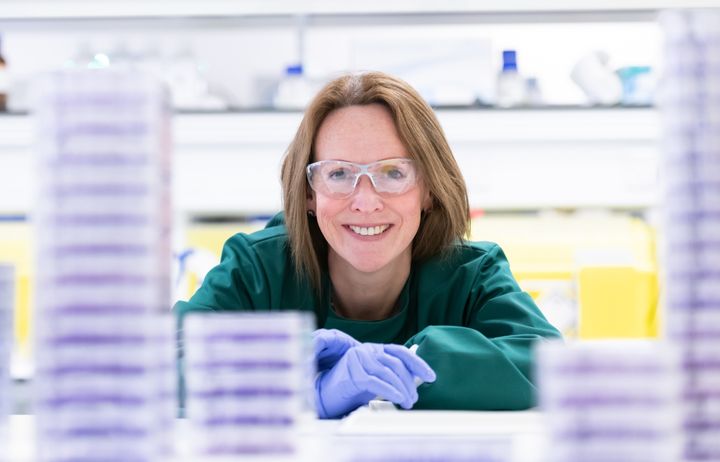
Dr. Antonia Solomon is a Postdoctoral research associate within the Platelet Biology group based at the National Heart and Lung Institute at Imperial College London.
Antonia graduated from the University of East London in 2007 with a BSc in Applied Biology. During her undergraduate study, her final year project focused on the pro-coagulatory effects of Delta-9-Tetrahydrocannabinoid (THC) in human platelets. Following this, she was awarded an NHLI Foundation studentship and joined Dr Michael Emerson’s group for her PhD at Imperial College London where she investigated the integrative roles of the Plasma Membrane Calcium ATPase (PMCA) in platelets focusing on calcium mobilisation, function, molecular signalling and the vascular endothelium in regulating platelet function and thrombotic disease in vitro and in vivo.
Antonia has since continued her research at Imperial College London, funded by the British Heart Foundation to investigate the mechanisms of platelet activation in vitro and in vivo by ambient particulate air pollutants (nanoparticles). Her work focuses to evaluate thrombotic risk and mechanisms by which nanoparticles prevalent in the UK ambient air may increase cardiovascular risk. This work is a collaborative project between Dr Michael Emerson and Professor Terry Tetley based at the Lung Cell Biology Group (Royal Brompton Hospital).
Aside from her science, Antonia is a member of the Molecular Medicine Events Committee and served on NHLI’s Postgraduate Research Student Committee. She is also a British Pharmacological Society and British Toxicological Society member.
In addition, Antonia has been awarded scholarships to attend and present in Singapore, Manchester, Boston, Chicago and Spain and received a highly commended award at the International Society of Thrombosis and Haemostasis (Boston 2009) for her presentation entitled ‘The Plasma Membrane Calcium ATPase (PMCA) Regulates Platelet Calcium Homeostasis and Function’.
She is currently a manuscript reviewer for Elsevier (Cell Calcium) and a fully qualified phlebotomist (NHS).


