
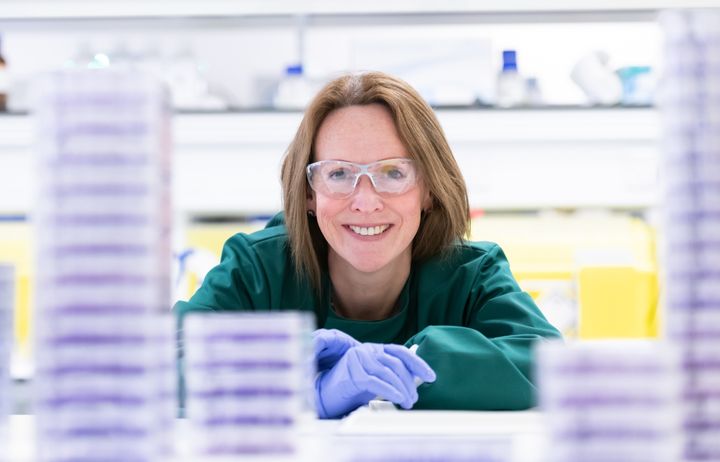
Dr David Bernardo Ordiz
Biography
I joined the APRG in May 2009 as a Marie Curie Research Fellow under the supervision of Prof. Stella C. Knight and have continued working in the APRG as a Research Associate since April 2011. My research centres on inflammatory bowel diseases (IBD) and coeliac disease pathogenesis including the role of commensal microbiota and the compartmentalization of immune responses.
I trained in Genetics and Biotechnology (MSc Biology, University of Oviedo, Spain, 2002) and Mucosal Immunology (PhD “Mucosal Immunology and interaction between the innate and the adaptive immune systems in coeliac disease” University of Valladolid, Spain, 2008) as well as becoming Universitarian Expert in Advanced Statistics (University of UNED, 2007).
Current Research
My current research centres on dendritic cell (DC) biology and its relationship with IBD pathogenesis (Crohn’s disease and ulcerative colitis) and coeliac disease.
DC (the “commanders-in-chief” of the immune system) are able to present antigens to naive T-cells to start either an active immune response or the mechanisms of immune tolerance. DC control migration of such trained T-cells, inducing on them a “post-code” which keeps immune responses localised to a specific tissue; our research indicates that DC also express such “post-codes” . Therefore, if we understand the expression of these tissue-specific markers on DC and T-cells, and learn how to modulate them we may be able to exert some site specific control of immune activity. For example, we would be able to ‘train’ DC from patients suffering with pathologies (such as cancer or IBD) to induce an appropriate immune response in a tissue specific way avoiding the collateral effects of systemic immunomodulation and providing the basis of an individualized cell therapy.
My recent interests have focussed on the mechanisms through which commensal microbiota establish an active dialogue with the intestinal immune system which contributes to intestinal homeostasis. Together with our collaborators we aim to characterize bioactive compounds which may have been honed in vivo over millennia to facilitate mutually beneficial interactions between the microbiota and the host. These compounds could provide the basis for non-drug related dietary treatment for people with IBD.
To achieve these goals I am studying the interaction of DC with lipid metabolites, vitamins (specifically vitamin A and D), the tissue environment and microbiota derived compounds for their capacity to immunomodulate the functional properties of DC.
Membership of Professional Bodies
Foundational Member, Spanish Coeliac Disease Society (Sociedad Espanola de Enfermedad Celiaca-SEEC)
Member, British Society for Immunology (BSI)
Member, Mucosal Immunology Society
Associate Faculty Member, Faculty of 1000 Biology.
Member, Coeliac UK health advisory network.
Research Links
UNIVERSITY OF OVIEDO. SPAIN.
Aquaculture Genetics Laboratory, Instituto Universitario de Biotecnologia de Asturias, Universidad de Oviedo, Spain (http://www.uniovi.es/IUBA/grupo.php?id=68&pag=4 )
UNIVERSITY OF VALLADOLID. SPAIN.
Mucosal Immunology Laboratory, Instituto de Biología y Genética Molecular (IBGM). Universidad de Valladolid-CSIC, Spain (http://www.ibgm.med.uva.es/portal/inicio.php?cont=LINE-00000000032)
INSTITUTO DE PRODUCTOS LACTEOS DE ASTURIAS-CSIC. SPAIN (http://www.ipla.csic.es/index.php?option=com_content&view=category&layout=blog&id=67&Itemid=186&lang=en)
OPEN UNIVERSITY. UK.
Faculty of Science Department of Life, Health & Chemical Sciences (http://science-people.open.ac.uk/h.a.macqueen)


