
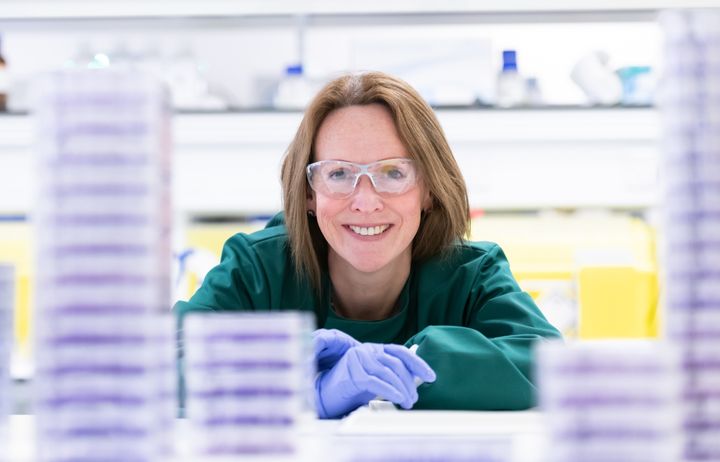
Dr Felicity Gavins

Contact details

Dr Felicity N Gavins

Senior Lecturer
Department of Medicine

Tel: +44 (0)20 7594 6586
Email: Email address for Dr Felicity N Gavins

Dr Felicity Gavins


Principle areas of research

Dr Gavins’ research interest focuses on inflammation and the regulation of leukocyte trafficking in the microcirculation. In particular, Dr Gavins and her team uses the specialized technique of intravital microscopy to study cellular interactions in the microvasculature (brain, mesentery, cremaster, lymph node) of animals with inflammation. This technique enables a qualitative and quantitative measurement of a variety of different events e.g. measurements of platelet-leukocyte-endothelial cell adhesion, endothelial surface expression of adhesion molecules in vascular beds, in vivo measurements of oxidant stress, and endothelial barrier function.

 DCIMPP MRESr Gavins also runs the MRes in Experimental Physiology and Drug Discovery (Bio-Imaging) programme and chairs a monthly seminar/ workshop for the Centre of Integrative Mammalian Physiology and Pharmacology.


Background Information

Inflammation and microvascular dysfunction have been implicated in a variety of pathologic conditions affecting the body, such as myocardial infarction and stroke. Features of the inflammatory response common to many of these pathological conditions are manifested in the microvasculature (including: oxidative stress, diminished endothelial barrier function, increased expression of endothelial cell adhesion molecules, and the recruitment of rolling and adherent leukocytes and platelets).

721medicineVideo placeholder


A hallmark of inflammation is the mobilization of blood-borne leukocytes across microvessels to kill and remove the invading pathogen. Despite leukocyte movement being tightly regulated, it is associated with the pathogenesis of a number of inflammatory disease states such as stroke (Figure 1), myocardial infarction and sickle cell disease.


link pic for IR

Figure 1. Paradigm proposed to explain leukocyte recruitment in cerebral microvessels following ischaemia and reperfusion. (click for full image)


Dr Gavins’ research focus uses inflammatory models for human disease that includes sepsis, ischaemia reperfusion injury, stroke, hypoxia and sickle cell disease. Within these disease areas we are able to use many techniques both in vitro (e.g. genomic, proteomics, cell culture, immunochemistry, ELISA and microscopy) and in vivo (e.g. telemetry, intra-vital microscopy, MRI and, PET imaging) in order to delineate molecular mechanisms underlying the recruitment of leukocytes to sites of inflammation, and in so doing develop novel therapeutic strategies for the treatment of inflammation in disease.


Current areas of particular interest:

1. Stroke: Understanding the pathophysiology of the disease and researching novel predictive biomarkers.

2. Ischaemia reperfusion (IR): Is a common feature of several diseases associated with high morbidity and mortality, such as stroke and myocardial infarction. The damaged tissue displays cardinal signs of inflammation and microvascular injury that, unless resolved, lead to long-term tissue damage with associated dysfunction (Figure 2).

IVM vessel

Figure 2. Cerebral microvessel showing adherent leukocytes on the endothelium following IR.


3. Sickle Cell Disease: The microvasculature assumes an inflammatory and pro-coagulant state in a variety of different diseases, including sickle cell disease (SCD). Dr Gavins was the first to provide evidence for accelerated thrombus formation in arterioles and venules in the cerebral vasculature of sickle cell transgenic mice and the involvement of endothelial cell receptor (EPCR. Figure 3). In particular, Dr Gavins found this event to be a neutrophil-dependent mechanism that is associated with an increased formation of, and enhanced platelet sensitivity to, thrombin (Gavins et al., 2011).


EPCR


Figure 3 Localization of EPCR in mouse brain from wild type (WT) and EPCR transgenic mice. These images show the (A) absence of EPCR in WT mice and the (B) presence of EPCR both in the large vessels as well as the capillary network of EPCR-TgN mice. TO-PRO3 nuclear (N) staining is shown as blue. Scale bars, 100 µm (Gavins et al., 2011).


4. Cross talk between thrombosis-inflammation: Inflammation and thrombosis are closely linked interdependent processes, which are associated with different diseases such as sickle cell disease.

5. Sepsis: Excessive inflammation seen during sepsis helps place it as a leading cause of mortality and morbidity, with few treatment options. We are currently identifying potential novel treatments for this disease.

6. Sexual dimorphism: Sexual dimorphism is the existence of physical differences between the sexes, other than differences in the sex organs. - Oestrogens may have a key role in affording protection in disease.


Current targets of interest:

1. Annexin 1 system: The therapeutic potential of this 37KDa anti-inflammatory protein and its mechanism of action in reducing leukocyte trafficking is being explored.

2. The melanocortin peptide system: The melanocortin receptors are a subfamily of G-protein-coupled, rhodopsin-like receptors that are rapidly being acknowledged as an extremely promising target for pharmacological intervention in a variety of different inflammatory pathologies. My group is currently investigating the endogenous roles of the melanocortin system in reducing characterized aspects of inflammation (Holloway et al., Trends Pharmacol Sci. 2010)

3. Formyl peptide receptors: Increasing evidence suggests that members of the formyl peptide receptor (FPR) family, in particular human FPR2/ALX, might have an important role in the pathophysiology of I/R injury (Gavins et al., Trends Pharmacol Sci. 2010). Investigations by my group are being performed to assess whether FPR ligands, particularly in the brain, could be novel and exciting anti-inflammatory therapeutics for the treatment of a variety of clinical conditions, including stroke.

4. Lipoxins. On going studies probing how these endogenous anti-inflammatory mediators are able to resolve inflammation e.g. they block neutrophil recruitment, neutrophil adhesion on the endothelium, augment eosinophil trafficking, and block TNF-α mediated cell interaction between neutrophils and colonocytes.

5. Glucocorticoids: Investigations into the anti-inflammatory effects of these hormones and how to reduce the side effects associated with therapeutic application are being examined.


Dr Gavins is supported by:

The Medical Research Council (MRC)

The British Heart Foundation (BHF)

The Biotechnology and Biological Sciences Research Council (BBSRC)

The Society for Endocrinology

The Physiological Society

The British Pharmacological Society

The Haematology Society


Related links

The Microcirculation group

Microcirc iconThe microcirculation group uses state of the art imaging techniques, such as intravital microscopy, to investigate leukocyte-platelet-endothelial cell interactions, with the aim of identifying novel anti-inflammatory mediators and pathways to promote the resolution of inflammation in I/R injury, sepsis and other inflammatory disease states.

Centre for Integrative Mammalian Physiology & Pharmacology

CIMPP iconThe aim of the CIMPP is to develop and refine in vivo research at imperial college and to provide postgraduate training in in vivo physiology and pharmacology, bringing together leading scientists in four strategic areas: Cardiovascular/Respiratory, Inflammation and Immunology , Metabolism  and Neuroscience


Share this on Delicious
Tweet this
Digg this
Stumble this
Share this on Facebook
 

 Collaborators

  • Professor Julia Buckingham
  • Professor Nick Long
  • Dr Paul Evans
  • Professor Richard Reynolds
  • Professor Dorian Haskard

National amd International Collaborators

  • Professor Roderick J. Flower (William Harvey Research Institute, UK)
  • Professor Mauro Perretti (William Harvey Research Institute, UK)
  • Professor Neil D Granger (Louisiana State University, USA)
  • Professor Michele D'Amico (2nd University of Naples, Italy)
  • Dr Stephen Getting (University of Westminster, UK)
  • Professor Charles Serhan (Harvard University, USA)

Students

  • Miss Ellen Hughes
  • Miss Helen Smith
  • Mr Paul Holloway
  • Miss Scarlett Gillespie
  • Miss Poh Cheong

Post-doc

  • Dr Graeme Stasiuk