




Rhys Farrer

Contact details

Mr Rhys Farrer

Rhys Farrer

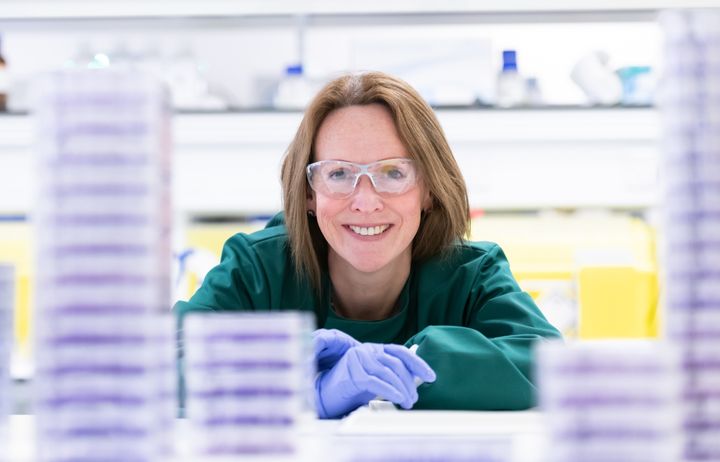
The development of high-throughput/next generation sequencing technologies has provided an unprecedented opportunity to study the evolution and epidemiology of eukaryotic pathogens. I have worked at the Sainsbury Lab in Norwich studying the genomes of 5 plant pathogens belonging to the Phytophthora genus. Currently I am studying a chytrid fungi named Batrachochytrium dendrobatidis (Bd), which has been shown to be the primary cause of global amphibian declines.

Publications

R. A. Farrer, L. A. Weinert, J. Bielby et al. Multiple emergence of genetically diverse amphibian-infecting chytrids include a globalised hypervirulent lineage. Proc. Natl. Acad. Sci. U. S. A.  In press (2011)

M. C. Fisher and R. A. Farrer, Outbreaks and the Emergence of Novel Fungal Infections: Lessions from the Panzootic of Amphibian Chytrdiomycosis. J. Invasive Fungal Infect. 5, 73–81 (2011).

S. Raffaele, R. A. Farrer, L. M. Cano, D. J. Studholme, D. MacLean, M. Thines, R. H. Y. Jiang, M. C. Zody, S. G. Kunjeti, N. M. Donofrio, B. C. Meyers, C. Nusbaum, S. Kamoun, Genome evolution following host jumps in the Irish potato famine pathogen lineage. Science. 330, 1540-3 (2010).

S. Schornack, E. Huitema, L. M. Cano, T. O. Bozkurt, R. Oliva, M. V. Damme, S. Schwizer, S. Raffaele, A. Chaparro-Garcia, R. A. Farrer, M. E. Segretin, J. Bos, B. J. Haas, M. C. Zody, C. Nusbaum, J. Win, M. Thines, S. Kamoun, Ten things to know about oomycete effectors. Mol. Plant Pathol. 10, 795-803 (2009).

R. A. Farrer, E. Kemen, J. D. G. Jones, D. J. Studholme, De novo assembly of the Pseudomonas syringae pv. syringae B728a genome using Illumina/Solexa short sequence reads. FEMS Microbiol Lett.. 291, 103-111 (2008).

 
Share this on Delicious
Tweet this
Digg this
Stumble this
Share this on Facebook