National Heart & Lung Institute (NHLI)

Membrane Traffic

Professor Miguel SeabraPrincipal Investigator

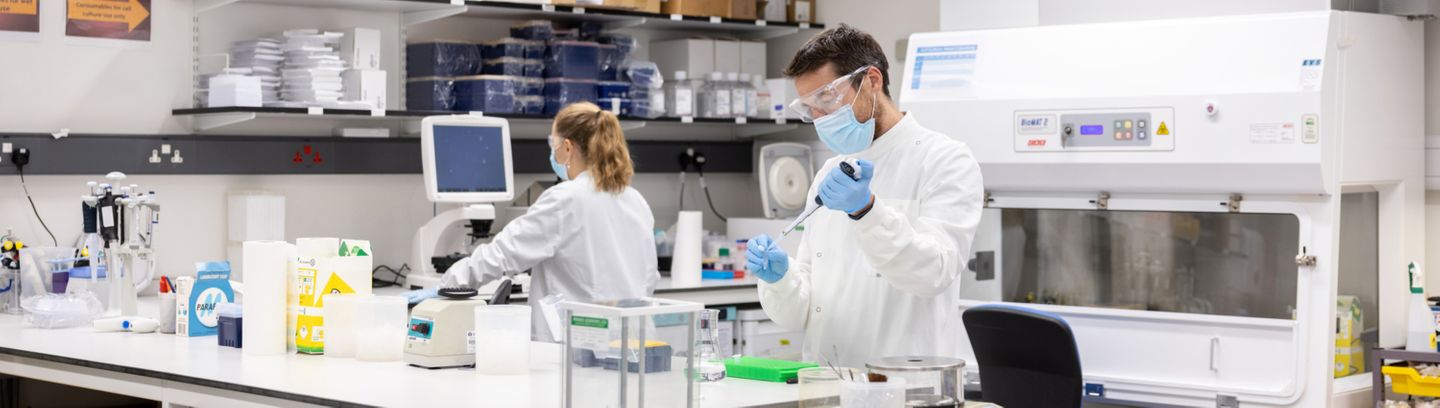
We are interested in membrane traffic and in particular the role of Rab GTPases and their interacting partners in the control of vesicle trafficking and organelle motility. Our lab is well established and has a good mix of experienced post-doctoral researchers and PhD students. We utilise a wide range of techniques including confocal, TIRF, video and electron microscopy, protein biochemistry and transgenic animal models.

Research Interests

Mouse melanocyteFigure 1. Confocal image of mouse melanocyte. Rab27a labelled in green and actin labelled in red.

One of the critical players in defining membrane identity and function are the Rab GTPases. More than 60 Rabs have been identified in mammalian cells and each one presents a specific subcellular localisation. Upon activation by binding GTP, Rabs recruit effector proteins such as molecular motors, enzymes (e.g. PI3-kinase) and membrane fusion factors, thus conferring specific functions to their target organelles.One of the most important challenges for the Biomedical Sciences this century is to develop a comprehensive knowledge of the fundamental unit of life, the cell. Each cell contains specialised compartments (organelles) that carry out different functions. One main question in Molecular Cell Biology is focused on understanding how cells achieve their highly sophisticated internal compartmentalisation. Each organelle is individualised by membranes, which contain specific proteins and lipids to execute specific functions. How are proteins and lipids sorted and retained to different locations or in other words how are organelles made, maintained (identified) and how do they communicate with each other? Our work in the last 15 years has dealt with this problem and our approach has been to study both normal and diseased cells.

 Our main research areas are:

back to top

Molecular Basis of Membrane Identity: Lipid Modifications of Rab GTPases and Membrane TargetingMolecular Basis of Membrane Identity: Lipid Modifications of Rab GTPases and Membrane Targeting


Lipid modification is essential for proper membrane association and function of Rab proteins. Rab proteins are prenylated by the enzyme Rab geranylgeranyl transferase (RGGT), this reaction requiring an accessory molecule named Rab Escort Protein (REP). We are studying the biochemistry and structural determinants of complex formation in the prenylation reaction, structural determinants for the Rab interaction with effectors and the mechanisms of membrane targeting and delivery of Rab proteins using in vitro assays and cellular studies.

back to top


Molecular Basis of Rab GTPase function: Rab27 as a model

melanocyte

Figure 2. Confocal image of mouse melanocyte.

Rab27a labelled in green, actin in red and tubulin in blue.

Rab GTPases regulate intracellular membrane traffic. A decade ago, we discovered Rab27 as a protein implicated in diseases of membrane traffic (see more below). We found that Rab27 associates with secretory granules in endocrine, exocrine, hematopoietic cells and related organelles such as melanosomes. Rab27a appears to behave as a maturation sensor, associating only with mature granules and regulating their motility and tethering with the plasma membrane during exocytosis. In melanocytes, Rab27 associates with Melanophilin and MyosinVa and tethers melanosomes to the peripheral actin cytoskeleton. In addition, Rab27 appears to play other roles, such as recruiting Munc13-4, a protein involved in membrane fusion. We are currently investigating the precise function of Rab27a in melanosome motility in skin melanocytes and retinal pigment epithelial cells. In addition, we are studying the role of Rab27 in exocytosis of lysosome-related organelles in hematopoietic cells such as mast cells and platelets.

back to top

Human Genetic Diseases involving Rab Proteins


Immunohistochemistry of WT v CHM retina

Figure 3. Immunohistochemical analysis of retina taken from wild type and CHM model mice.

Several inherited human disorders have been associated with defects in Rab protein activity, either directly or indirectly. Our studies focus on Choroideremia, Hermansky-Pudlak syndrome and Griscelli syndrome. Choroideremia (CHM) is an X-linked late-onset retinal degeneration characterised by progressive dystrophy of photoreceptors, retinal pigment epithelium (RPE) and the choroid. Choroideremia is due to a defect in Rab Escort Protein 1 (REP1), a cofactor required for the prenylation of Rab proteins. We have recently generated a mouse model for Choroideremia using conditional gene knockout (cre-lox) technology. We have shown that the disease is cell autonomous, with independent degeneration of photoreceptors and retinal pigment epithelial cells. We are using the mouse model to further investigate the pathogenesis of the disease and also to perform pre-clinical gene therapy studies that could lead to a possible cure for Choroideremia patients. Griscelli syndrome is related to Hermansky-Pudlak syndrome since both are disorders affecting lysosome-related organelles. Griscelli syndrome associates partial albinism with immunodeficiency due to cytotoxic T-lymphocyte killing activity defects. The disease is caused by mutations to melanocytes and T-lymphocytes. We suggested that the related protein Rab27b, which exhibits a more restricted pattern of expression, may compensate for the loss of Rab27a in some cell types. We have recently created a Rab27b knock-out mouse also using Cre-lox technology, which will enable us to further dissect the roles of Rab27 proteins in secretory cells.

back to top

lab photo 2009

Professor Miguel Seabra and members of his group, 2009

Share this on DeliciousTweet thisDigg thisStumble thisShare this on Facebook
 

Collaborators within the college

  • Alexandra Berry (PhD student)
  • Marie Kirsten (PhD student)